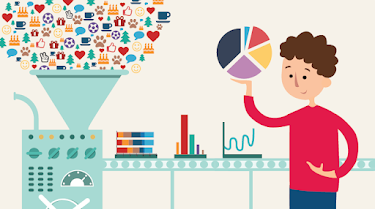
• Technology Trends In India

    India is one of the fastest-growing technology markets in the world, and it is expected to continue to experience significant growth in the coming years

  • Education Of Technology In India

    The Indian government has launched various initiatives to improve digital skills training across the country. Programs like Digital India and Skill India are aimed at providing training to people in rural areas and those from underprivileged backgrounds to enable them to participate in the digital economy.

  • Developing AI in India

    India has a large pool of talented engineers and data scientists, many of whom are working in the field of AI. Many universities and institutions in India offer courses and training programs in AI, and there are also many online platforms that provide training in AI.

  • Technological Bussiness

    Technological businesses are companies that develop, manufacture, and/or sell products or services based on advanced technology

  • Technology is Moving Ahead

    AI is transforming various industries by automating processes, predicting outcomes, and optimizing workflows. With advancements in machine learning, natural language processing, and computer vision, AI is becoming increasingly sophisticated and capable of handling complex tasks.

Operating System


An operating system (OS) is a software program that manages computer hardware and software resources and provides common services for computer programs. It is the most important type of system software in a computer system and is responsible for controlling the computer's hardware and running application software.

The main functions of an operating system include:

  1. Memory Management: The operating system manages the computer's memory and allocates it to different processes and applications as needed.

  2. Processor Management: The operating system manages the computer's processor and allocates it to different processes and applications as needed.

  3. Device Management: The operating system manages the computer's devices, such as the keyboard, mouse, and printer, and provides a way for applications to access these devices.

  4. File Management: The operating system manages the computer's files and directories and provides a way for applications to access and manipulate files.

  5. User Interface: The operating system provides a user interface for users to interact with the computer system, such as a command-line interface or a graphical user interface.

Some examples of popular operating systems include:

  1. Microsoft Windows: This is the most widely used operating system for personal computers. It has a graphical user interface and is designed to be easy to use for home and business users.

  2. macOS: This is the operating system used on Apple Macintosh computers. It is similar to Windows in many ways but has a different user interface and a different set of applications.

  3. Linux: This is an open-source operating system that is freely available and can be modified by users. Linux is widely used for servers, supercomputers, and other specialized applications.

  4. Android: This is the most widely used operating system for mobile devices such as smartphones and tablets. It is based on the Linux kernel and is designed to be easy to use on small screens.

  5. iOS: This is the operating system used on Apple's iPhones and iPads. It is similar to macOS in many ways but is designed specifically for mobile devices.

Share:

Software


Software refers to the programs and applications that run on a computer system. It includes the operating system (OS), which is the software that manages the hardware and provides a user interface, as well as application software, which is used to perform specific tasks.

Here are some examples of software:

  • Operating system: The operating system (OS) is the software that manages the hardware resources of a computer system and provides a user interface. Examples of operating systems include Windows, macOS, and Linux.
  • Productivity software: This includes applications used for creating and editing documents, spreadsheets, presentations, and other types of content. Examples of productivity software include Microsoft Office, Google Docs, and LibreOffice.
  • Media software: This includes applications used for playing and managing media files, such as music and videos. Examples of media software include Windows Media Player, iTunes, and VLC Media Player.
  • Graphics software: This includes applications used for creating and editing graphics and images. Examples of graphics software include Adobe Photoshop, GIMP, and CorelDRAW.
  • Programming software: This includes software used for writing, testing, and debugging computer programs. Examples of programming software include Integrated Development Environments (IDEs) like Visual Studio, Eclipse, and NetBeans.
  • Antivirus software: This includes software used for detecting and removing computer viruses and other types of malware. Examples of antivirus software include Norton, McAfee, and Avast.
  • Web browsers: These are applications used for accessing and navigating the World Wide Web. Examples of web browsers include Google Chrome, Mozilla Firefox, and Microsoft Edge.
  • Games: These are software applications used for entertainment and include all types of games such as action, adventure, puzzle, and simulation.

There are many other types of software, and new applications are being developed all the time to meet the needs of users in various fields.

Share:

Hardware


Hardware refers to the physical components of a computer system, such as the central processing unit (CPU), random access memory (RAM), hard disk drive (HDD), solid-state drive (SSD), graphics processing unit (GPU), motherboard, power supply, and other peripherals such as a keyboard, mouse, and monitor.

The specifications of these hardware components can vary depending on the specific make and model of the computer system. Some common specifications include clock speed and number of cores for the CPU, amount of RAM and storage capacity for the HDD or SSD, and the model and memory size for the GPU.

Here are some examples of common hardware components and their functions:

  • CPU: The central processing unit is responsible for executing instructions and performing calculations in a computer system.
  • RAM: Random access memory is a type of volatile memory that is used to temporarily store data and instructions that are currently being executed by the CPU.
  • HDD/SSD: A hard disk drive or solid-state drive is used for long-term storage of data on a computer system. An SSD is generally faster and more reliable than an HDD, but also more expensive.
  • GPU: The graphics processing unit is used to render graphics and video on a computer system.
  • Motherboard: The motherboard is the main circuit board that connects all the components of a computer system together.
  • Power supply: The power supply provides power to all the components in a computer system.
  • Keyboard and mouse: These peripherals are used to input data and commands into a computer system.
  • Monitor: The monitor displays the output of a computer system, including text, graphics, and video.
Share:

Hacking


Hacking is the unauthorized access of a computer system or network. It involves exploiting vulnerabilities in computer systems or networks to gain unauthorized access, steal information, or cause damage. Hacking can be carried out for various purposes, including financial gain, political motivations, or personal satisfaction.

There are different types of hackers, such as white hat hackers, who are ethical hackers that test and improve system security, black hat hackers, who use hacking for malicious purposes, and gray hat hackers, who may use their skills for both ethical and unethical purposes.

Hacking is illegal and can result in serious consequences, including fines, imprisonment, and damage to one's reputation. It is important for individuals and organizations to take measures to protect their computer systems and networks from hacking attempts, such as using strong passwords, regularly updating software and security systems, and implementing multi-factor authentication.

Here is some general information about hacking:

  1. Hacking can be carried out in many ways, including phishing attacks, password cracking, social engineering, and exploiting software vulnerabilities.

  2. Hackers may target individuals, organizations, or governments for various reasons, including financial gain, political motives, or personal satisfaction.

  3. There are various types of hackers, including white hat hackers (ethical hackers), black hat hackers (malicious hackers), gray hat hackers (both ethical and malicious), and hacktivists (hackers motivated by social or political causes).

  4. Hacking is illegal and can result in severe consequences, including legal action, fines, imprisonment, and damage to one's reputation.

  5. To protect against hacking attempts, individuals and organizations can take steps such as using strong passwords, regularly updating software and security systems, and implementing multi-factor authentication.

It is important to note that hacking is illegal and can have serious consequences. If you believe that you or your organization has been a victim of hacking, it is important to contact law enforcement and seek professional help to mitigate the damage.

Share:

Robotics


Robotics is the field of engineering and science that deals with the design, construction, and operation of robots. A robot is a machine that is capable of carrying out tasks autonomously, or with minimal human intervention. Robotics is a multidisciplinary field that draws upon expertise from areas such as mechanical engineering, electrical engineering, computer science, and artificial intelligence.

Robots can be designed for a wide variety of tasks, ranging from industrial manufacturing to healthcare, agriculture, and space exploration. Industrial robots, for example, are commonly used in factories and other manufacturing environments to automate repetitive tasks such as assembly, welding, and painting. In healthcare, robots are being developed to assist with surgery, patient care, and rehabilitation.

One of the key challenges in robotics is developing machines that can interact with their environment in a safe and effective manner. This involves designing sensors and control systems that allow robots to perceive and respond to their surroundings, as well as developing algorithms for motion planning and control.

Another important area of research in robotics is the development of autonomous systems, which are capable of carrying out tasks without human intervention. Autonomous robots are being used in a variety of applications, from exploring remote or hazardous environments to delivering packages and performing search and rescue operations.

As robotics technology continues to advance, robots are becoming increasingly integrated into our daily lives. From household cleaning robots to self-driving cars, robotics has the potential to revolutionize many aspects of our society and economy.

Share:

Natural language processing (NLP)


Natural language processing (NLP) is a branch of artificial intelligence (AI) that focuses on the interaction between computers and humans through natural language. NLP involves developing algorithms and computer programs that can analyze, understand, and generate human language.

NLP techniques are used in a variety of applications, including chatbots, virtual assistants, speech recognition systems, and machine translation tools. NLP algorithms typically involve analyzing large amounts of text data to identify patterns and relationships between words and phrases.

Some of the key challenges in NLP include understanding the nuances and complexities of human language, dealing with ambiguity and context, and developing algorithms that can process and analyze text in real-time. Despite these challenges, NLP has made significant strides in recent years, and is becoming increasingly important in a wide range of industries, from healthcare and finance to customer service and marketing.

One of the key applications of NLP is in the development of chatbots and virtual assistants. These systems can interact with users through natural language, and can help automate a wide range of tasks, from answering customer inquiries to scheduling appointments and making reservations. NLP algorithms are also used in speech recognition systems, which can transcribe spoken language into text, and in machine translation tools, which can translate text from one language to another.

Share:

Deep Learning


Deep learning is a subset of machine learning that involves training artificial neural networks to perform complex tasks. Neural networks are inspired by the structure and function of the human brain, and they consist of layers of interconnected nodes that process information and make decisions.

Deep learning involves training neural networks with large amounts of data to identify patterns and make predictions or decisions. This is done through a process called backpropagation, which involves adjusting the weights and biases of the network based on the errors it makes in its predictions.

Deep learning has revolutionized a number of industries, including computer vision, natural language processing, and robotics. In computer vision, deep learning algorithms have been used to develop image recognition systems that can identify objects in images with a high degree of accuracy. In natural language processing, deep learning algorithms have been used to develop chatbots and other conversational AI systems that can understand and respond to human language. In robotics, deep learning algorithms have been used to develop autonomous systems that can perform complex tasks, such as driving cars or flying drones.

One of the key advantages of deep learning is its ability to learn from large amounts of data and make accurate predictions or decisions based on that data. This has significant implications for a wide range of industries, from healthcare to finance to transportation. However, deep learning is also computationally intensive and requires large amounts of processing power and memory, which can limit its applicability in certain contexts.

Share:

Machine Learning


Machine learning is a type of artificial intelligence that allows machines to learn from data and improve their performance on specific tasks without being explicitly programmed to do so. In other words, machine learning involves the development of algorithms that can automatically identify patterns in data and use those patterns to make predictions or decisions.

The goal of machine learning is to create algorithms that can learn from data and make accurate predictions or decisions based on that data. This involves a number of techniques, including supervised learning, unsupervised learning, and reinforcement learning. Supervised learning involves training an algorithm on labeled data, while unsupervised learning involves training an algorithm on unlabeled data. Reinforcement learning involves training an algorithm to make decisions based on feedback from the environment.

Machine learning has a wide range of applications, including image recognition, natural language processing, and predictive analytics. In image recognition, machine learning algorithms can be trained to identify objects in images, while in natural language processing, machine learning algorithms can be trained to understand and respond to human language. In predictive analytics, machine learning algorithms can be used to analyze large amounts of data and make predictions about future outcomes.

One of the key advantages of machine learning is its ability to analyze large amounts of data quickly and accurately. This has significant implications for a wide range of industries, from healthcare to finance to transportation. While there are still limitations to machine learning technology, such as the need for large amounts of data and the potential for bias in the algorithms, advances in machine learning are constantly pushing the boundaries of what is possible.

Share:

3D Printing


3D printing, also known as additive manufacturing, is a process of creating three-dimensional objects by depositing materials layer by layer based on a digital model. 3D printing has revolutionized manufacturing by enabling the creation of complex and customized objects that would be difficult or impossible to produce using traditional manufacturing methods.

The 3D printing process starts with creating a 3D model using computer-aided design (CAD) software. The software then slices the model into thin layers, and the 3D printer uses the digital design as a guide to deposit material, layer by layer, until the object is complete. The materials used in 3D printing can range from plastics and metals to ceramics and even living tissue.

3D printing has a wide range of applications, from prototyping and manufacturing to medicine and aerospace. In manufacturing, 3D printing is used to create complex parts and prototypes quickly and cost-effectively. In medicine, 3D printing is used to create customized prosthetics, implants, and even organs. In aerospace, 3D printing is used to create lightweight and complex parts for spacecraft and aircraft.

One of the biggest advantages of 3D printing is its ability to create customized and complex objects quickly and cost-effectively. This has significant implications for manufacturing and many other industries. While there are still limitations to 3D printing technology, such as the size of objects that can be printed and the materials that can be used, advances in 3D printing technology are constantly pushing the boundaries of what is possible.

Share:

Cloud Computing


Cloud computing refers to the delivery of computing services, including servers, storage, databases, networking, software, analytics, and intelligence, over the internet. Instead of owning and maintaining their own computing infrastructure, organizations can use cloud computing services to access resources on demand and pay for only what they use.

Cloud computing offers several benefits, including scalability, flexibility, and cost savings. Organizations can quickly scale up or down their computing resources as needed, without having to invest in additional hardware or software. Cloud computing also allows teams to collaborate more easily and work from anywhere, as long as they have internet access.

There are three main types of cloud computing services: Infrastructure as a Service (IaaS), Platform as a Service (PaaS), and Software as a Service (SaaS). IaaS provides access to computing resources, such as virtual machines and storage, over the internet. PaaS provides a platform for developers to build, test, and deploy applications, without having to manage the underlying infrastructure. SaaS provides access to software applications, such as email, customer relationship management (CRM), and accounting software, over the internet.

While cloud computing offers many benefits, there are also potential drawbacks to consider, such as security concerns and the risk of vendor lock-in. As with any technology, it is important for organizations to carefully consider their needs and evaluate their options before adopting cloud computing.

Share:

Virtual and Augmented Reality (VR/AR)


Virtual Reality (VR) and Augmented Reality (AR) are technologies that create immersive digital experiences for users.

Virtual Reality involves the use of a headset or other device to create a completely simulated environment. By wearing a VR headset, users are able to immerse themselves in a digital world and interact with it as if they were actually there. VR technology is commonly used in gaming, but has many other applications, such as in education, training, and therapy.

Augmented Reality, on the other hand, involves overlaying digital information onto the real world. AR technology can be used to enhance real-world experiences by adding digital information, such as text, images, or videos, to a user's view of the real world. AR is often used in mobile apps and games, but also has potential applications in fields such as healthcare, where it can be used to provide real-time guidance to medical professionals.

Both VR and AR technologies have the potential to transform the way we experience and interact with the digital world. However, there are also challenges to their widespread adoption, such as the high cost of VR headsets and the need for specialized software and hardware to create AR experiences. As these technologies continue to evolve, they are likely to be used in increasingly innovative ways, transforming everything from entertainment to healthcare to education.

Share:

Blockchain


Blockchain is a digital ledger technology that allows data to be recorded and shared in a secure and transparent way. It consists of a decentralized database that is maintained and updated by a network of computers, rather than being controlled by a single entity.

The data on a blockchain is stored in blocks, which are linked together in chronological order to form a chain. Each block contains a unique code, or "hash," that identifies it and the data it contains. Once a block is added to the chain, it cannot be altered or deleted, ensuring the integrity of the data.

One of the key features of blockchain is its ability to create trust and transparency in transactions. For example, blockchain can be used to create a secure and transparent record of financial transactions, or to track the movement of goods through a supply chain.

Blockchain technology has many potential applications beyond finance and supply chain management. It can be used to create secure voting systems, to protect intellectual property rights, and to enable peer-to-peer energy trading.

However, there are also challenges to the widespread adoption of blockchain technology, including issues related to scalability, interoperability, and regulation. As the technology continues to evolve, it is likely to be used in increasingly innovative ways, transforming the way we record and share data.

Share:

Data Cleaning And Preprocessing

Data cleaning and preprocessing are crucial steps in the data analysis workflow. These steps ensure that the data is in the best possible sh...

Search This Blog

Recent Posts

Pages

Theme Support

Need our help to upload or customize this blogger template? Contact me with details about the theme customization you need.