.pngL.jpg)

.jpg)


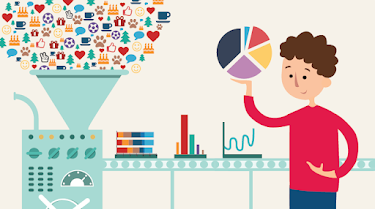
Data collection is the process of gathering and measuring information on variables of interest in a systematic way that enables one to answer research questions, test hypotheses, and evaluate outcomes. Here’s an overview of the key steps and considerations in data collection:
Here are some of the key of data collections:
1. Define Objectives
- Clearly outline the purpose of the data collection.
- Identify the research questions or hypotheses.
2. Determine Data Types and Sources
- Decide whether you need qualitative or quantitative data.
- Identify primary sources (original data collected for the specific purpose) or secondary sources (existing data).
3. Select Data Collection Methods
- Surveys and Questionnaires: For quantitative data from a large population.
- Interviews: For in-depth qualitative insights.
- Observations: For real-time data on behaviors or events.
- Experiments: For controlled studies to establish causality.
- Existing Data Analysis: For secondary data from sources like databases, records, and publications.
4. Design the Data Collection Process
- Develop tools and instruments (e.g., survey forms, interview guides).
- Ensure tools are reliable (consistent results) and valid (accurately measure what they are supposed to).
5. Sampling
- Define the target population.
- Choose a sampling method (e.g., random sampling, stratified sampling).
- Determine the sample size.
6. Collect Data
- Execute the data collection plan.
- Train data collectors if necessary.
- Monitor the process to ensure consistency and accuracy.
7. Data Management
- Organize and store data securely.
- Ensure data quality through cleaning and validation.
8. Data Analysis
- Use statistical or qualitative analysis methods to interpret the data.
- Draw conclusions based on the findings.
9. Reporting
- Present the findings in a clear and concise manner.
- Use visualizations and summaries to enhance understanding.
Ethical Considerations
- Obtain informed consent from participants.
- Ensure confidentiality and privacy.
- Be transparent about data usage and purpose.
Would you like more detailed information on any specific aspect of data collection? Let me Know In Comment Box.